Hypacke: How to Research a New Name Before You Trust It
Every week a new brand, tool or service appears online, and people start searching for it by name. Hypacke is one of those names. If you’ve come across it and want to know what it is, the smartest thing you can do is slow down and check a few things before you click, sign up or pay.
This guide walks through a simple way to research Hypacke, or any unfamiliar name, so you decide with facts rather than hype.
Why Unfamiliar Names Deserve a Closer Look
The internet makes it easy for anyone to launch a website in an afternoon. That’s great for genuine small businesses, but it also means polished pages can appear overnight with very little behind them.
Searching for a name and finding little isn’t proof of anything bad. Many honest projects are simply new. But limited information means you carry more of the responsibility to verify. The steps below help you do that.
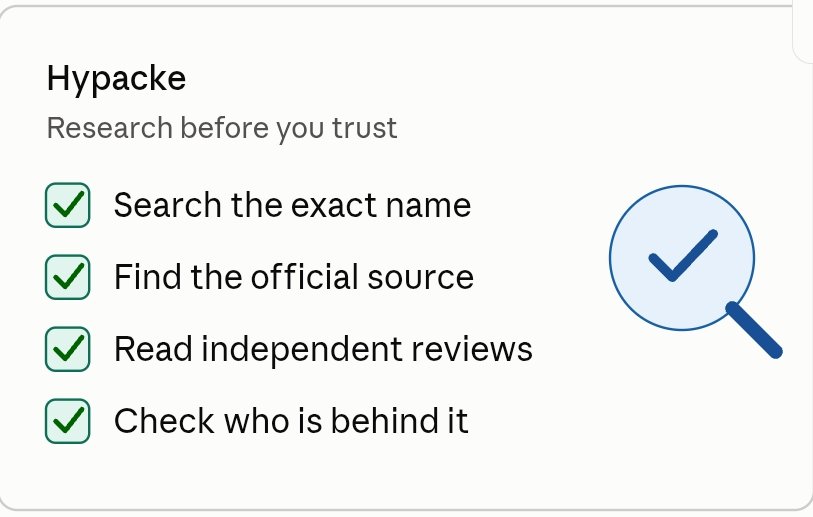
Step 1: Search the Exact Name
Start with the plain keyword, “Hypacke,” in quotation marks. Quotation marks tell the search engine to look for that exact spelling rather than similar words.
Notice what comes back. Are there pages that clearly describe what Hypacke is, or only a handful of near-identical listings? Genuine products usually leave a varied trail: their own website, mentions on other sites, social profiles and maybe a few independent write-ups.
Also try common spelling variations. Names like this are often confused with similar-looking ones, and you may land on something unrelated if you aren’t careful.
Step 2: Find the Official Source
Whatever Hypacke turns out to be, there should be one official home for it, such as a website, an app store listing or a verified social account. Look for these signs:
- A clear explanation of what it does. If you read three paragraphs and still can’t say what is being offered, that’s a warning sign.
- Contact details. A real email address, support form or business address shows someone is accountable.
- Policies. Privacy, refund and terms pages should exist and read like they were written for this specific business.
- A secure connection. The site address should begin with https, though this alone proves very little.
Step 3: Look for Independent Opinions
Anything a brand says about itself is marketing. What matters is what independent people say.
Look for reviews on third-party platforms, discussions in forums and communities, and comments from actual users. Read a mix of positive and negative ones. A product with only glowing five-star praise written in the same style deserves suspicion. Real feedback is usually uneven, with specific details about what worked and what didn’t.
If you can’t find any independent opinions at all, treat that as unknown rather than good or bad. It simply means you’ll need to be more careful.
Step 4: Check Who Is Behind It
Trustworthy projects tend to show their people. Look for an about page, a founder name, a company registration or a team profile. Then verify it. Does that person or company exist elsewhere online? Do the details match?
Anonymous operations aren’t automatically dishonest, but if money or personal data is involved, knowing who stands behind a name matters a great deal.
Step 5: Protect Yourself Before You Commit
Even after good research, take sensible precautions:
- Start small. If you must pay, choose the smallest option first rather than a long-term plan.
- Use safe payment methods. Cards and recognized payment services usually offer dispute options that bank transfers don’t.
- Share minimal data. Give only what is needed. If a form asks for far more than the service requires, ask why.
- Keep records. Save receipts, confirmation emails and screenshots of what was promised.
- Use a unique password. Never reuse a password from your email or bank on a new service.
Red Flags to Watch For
Certain patterns appear again and again in unreliable offers:
- Promises of guaranteed results, instant riches or “secret” methods
- Countdown timers and pressure to buy right now
- Prices that seem far too low for what is described
- No way to reach a human being
- Reviews that sound identical or appear only on the brand’s own pages
- Requests for payment in unusual or untraceable forms
One red flag doesn’t settle the matter, but several together are a good reason to walk away.
What a Good Sign Looks Like
On the positive side, reliable names usually show consistency. The website, social accounts and listings all tell the same story. Support responds to questions with real answers, not scripts. The terms are clear, the pricing is open, and the company is comfortable with you taking your time.
A brand that welcomes your questions is almost always safer than one that rushes you.
If You Own the Name Hypacke
If you’re the person behind Hypacke, this same checklist works in reverse. People searching for you are asking these exact questions, so make the answers easy to find:
- Publish a clear page explaining what Hypacke is and who it serves.
- Show real people, real contact details and honest policies.
- Collect genuine reviews and share them openly.
- Keep your name, spelling and branding consistent everywhere.
- Create useful content, such as guides and FAQs, that answers the questions people actually have.
Trust online is built slowly, through clarity and consistency. A new name with a transparent presence can earn confidence faster than you might expect.
Final Thoughts
A name alone tells you very little. Whether Hypacke is a product, a service, a brand or something else entirely, the way to judge it is the same as for anything new: search carefully, find the official source, read independent opinions, learn who is behind it, and protect yourself while you test.
Curiosity is healthy. Blind trust isn’t. Take your time, ask questions, and let evidence decide.
Agar aap Hypacke ke baare mein 3-4 lines (kya hai, kiske liye, kya features) bhej do, to main isi article ko bilkul us par based, aur zyada original bana dunga. Chahein to ise file mein bhi bana sakta hoon.